Instagram film · 42 s · 9:16
LOG OUT
A film about quitting the scroll, made with zero cameras: every shot was generated from reference images, with the same face from start to finish.
- 42 s
- film length
- ~40
- reference images (moodboard + face)
- 4
- AI transitions: building, screen, wall, eye
- 0
- cameras: every shot is generated
Make real life look real, keep the magic for the transitions
The film's argument is "this is my real life". No camera was used: the bed, the bus stop, the metro and the desk are all generated stills, each built from a reference image collected online plus the same face reference.
Those everyday shots are kept plain on purpose: natural light, ordinary framing, no effects. The visible AI moments are a handful of transitions: the push-in to a single lit window, a screen that turns into a room, a wall that turns into a portal, and the dive toward the face and the eye.
The transitions feel magical because everything around them looks ordinary.
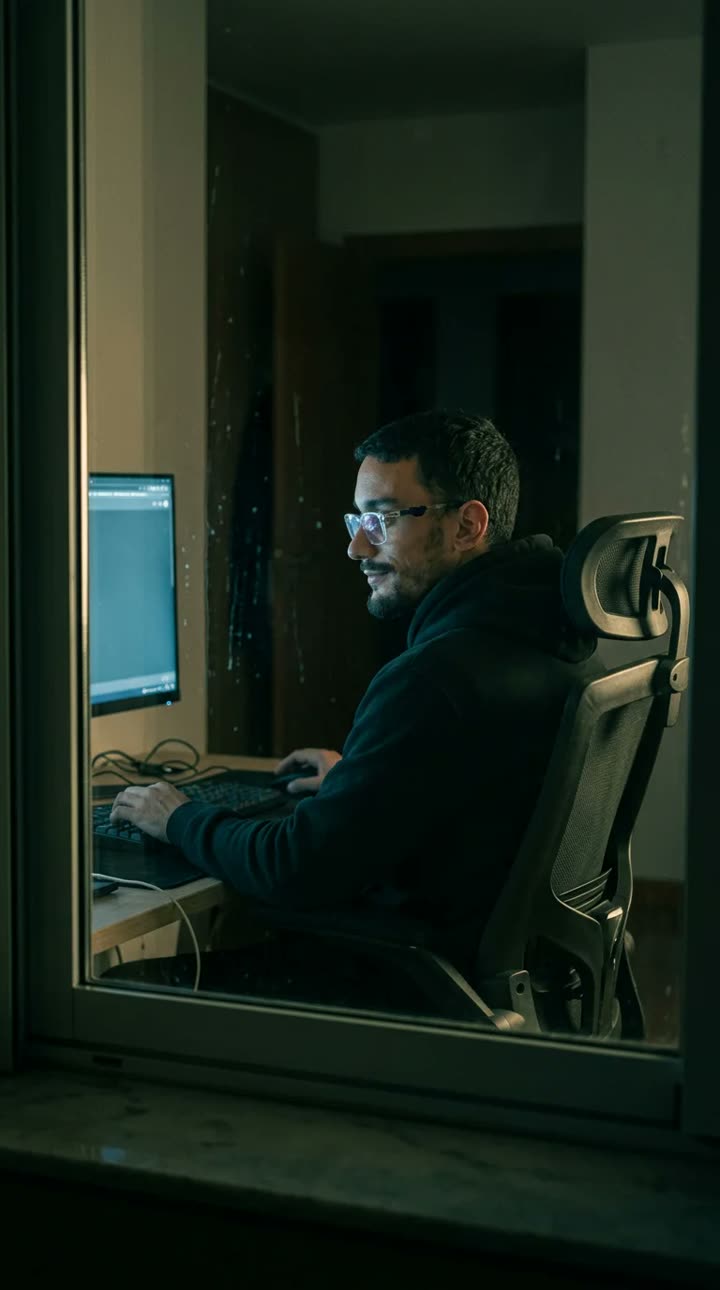
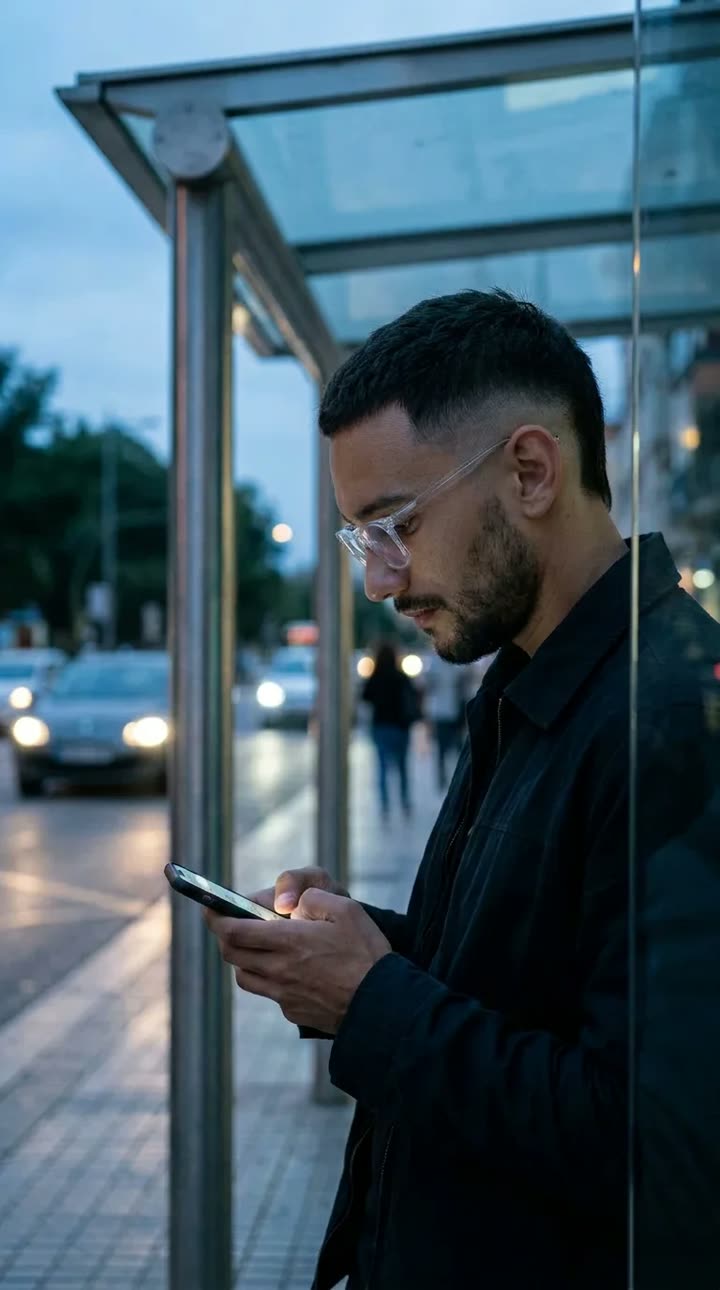
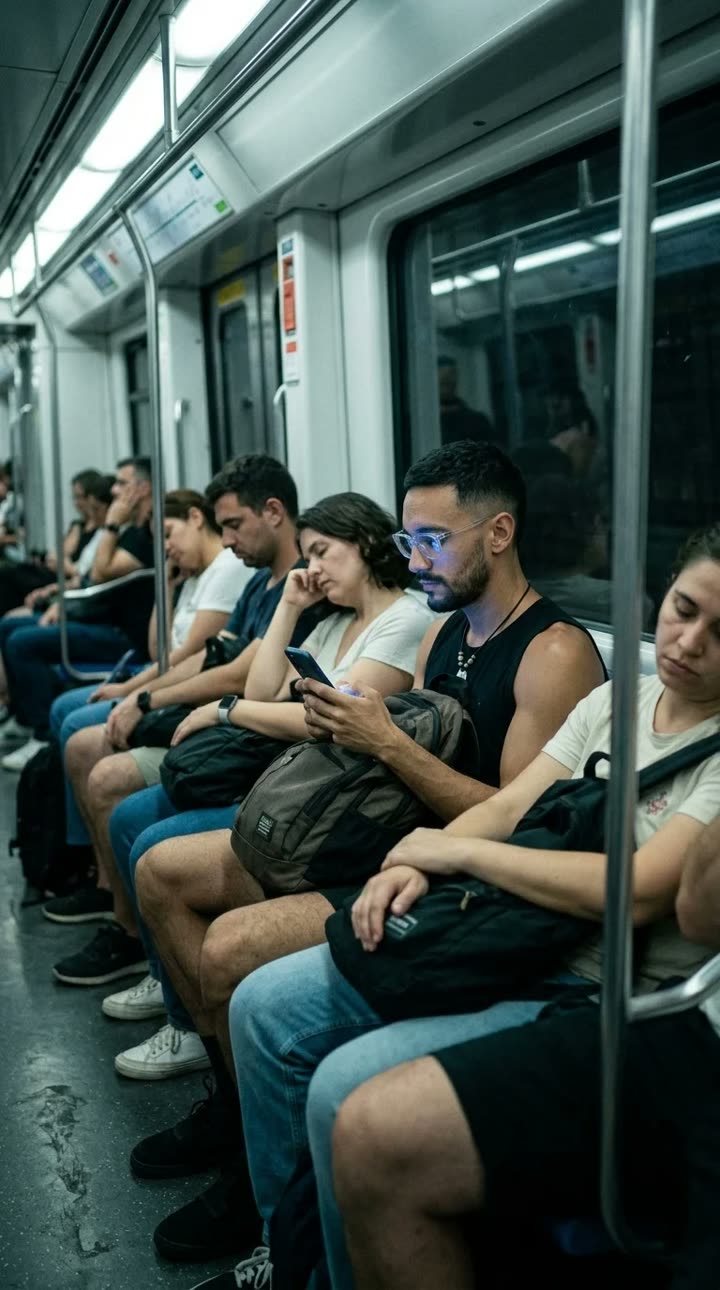
A bank of about 40 reference images
Before generating anything, we gathered about 40 references in a moodboard: night building exteriors, a bedroom wall and bed, a desk setup, a face reference set (including an eye macro), and app screenshots.
Every AI shot starts from one reference plus the face reference, not from a prompt alone. That keeps the face, the light and the room consistent from shot to shot.
One rule: validate one shot before starting the next.
One face, fixed before any scene
The face comes from a real selfie, plus a second photo used only for the haircut. One prompt locked the identity and asked for a sheet of several angles on a neutral background. That sheet became the face reference for every scene of the film. The sheet below shows the same method on another character.
The prompt is mostly a list of what must not change: no face blending, no beauty filter, no different eyes or nose. Saying what to protect worked better than describing the face.
For the eye shot, we asked to remove whatever was reflected in the glasses. Clean lenses first; the screen reflection comes later, where the film needs it.
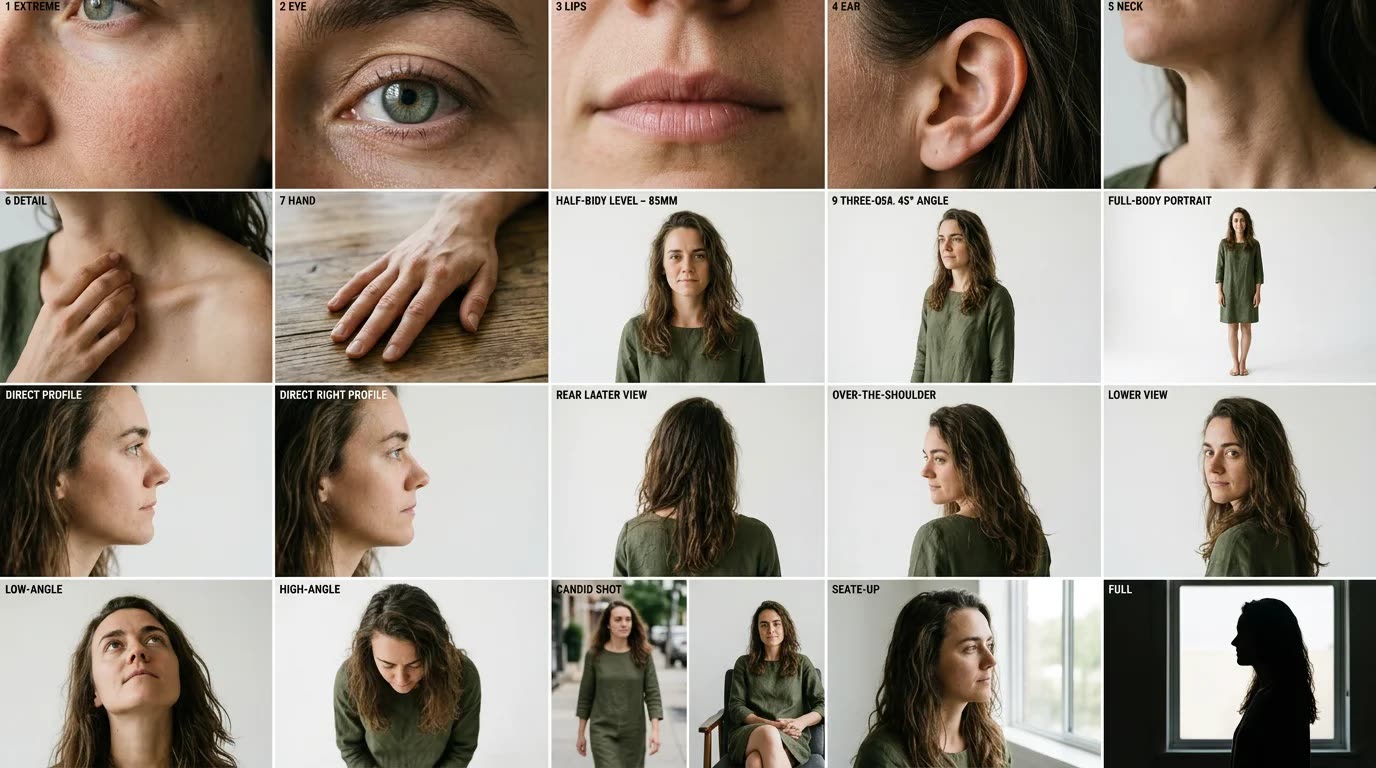
Do not modify the facial identity from the first reference. Do not blend identities. Do not copy the face, head shape, skin tone, facial proportions or expression from the second reference. Transfer only the hairstyle. No face morphing, no beauty filter, no smooth skin, no CGI, no cartoon, no anime, no exaggerated jawline, no different nose, no different eyes, no different eyebrows, no altered lips, no beard changes, no glasses, no oversized hairstyle, no more than approximately 7 cm of hair on top, no excessive volume, no fluffy TikTok hairstyle, no watermark, no text, no artifacts.
📷 3/4 left
📷 3/4 right
📷 Left profile
📷 Right profile
📷 Slightly above eye level
📷 Slightly below eye level
One window lit in a dark building
We started from a reference night photo of a building and asked Nano Banana to switch off every window but one. Then came short corrections, one at a time: a single computer, then the focus on the monitor.
Kling then animated the still into a slow push-in toward the window. Shot 3 continues the same move until the window frame fills the screen.
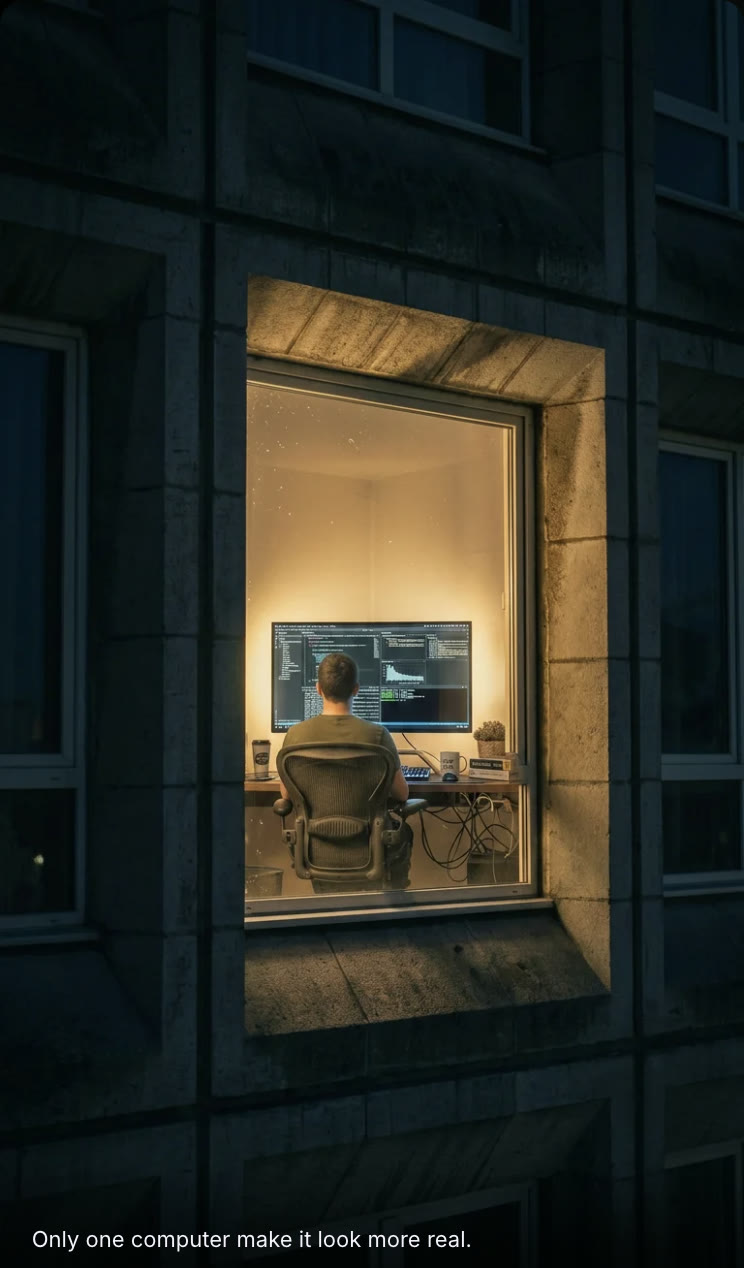
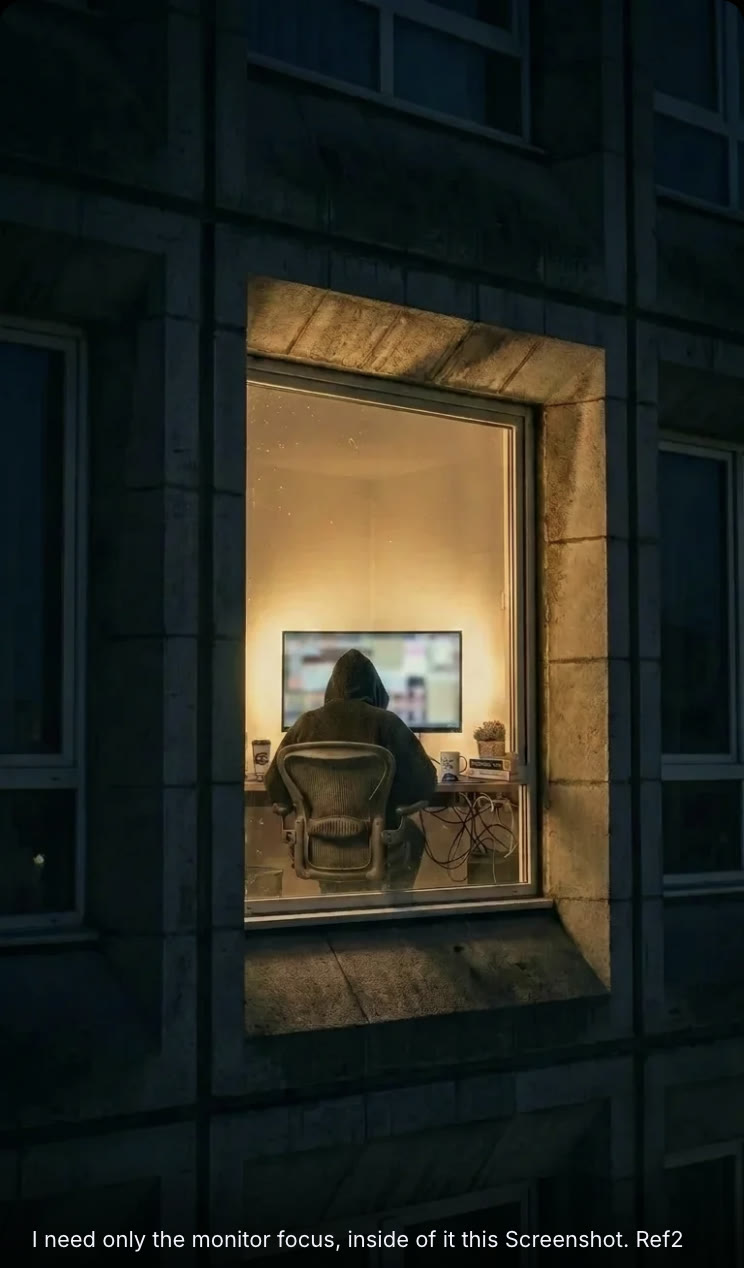
Edit this photo: night scene, all windows of the building completely dark except ONE window on the top floor glowing warm yellow. Inside that window, the faint silhouette of a person sitting at a computer. Quiet empty street, cinematic moody lighting, slight film grain, cold blue night tones contrasting with the single warm window. Photorealistic, cinematic color grade.
Slow steady camera push-in toward the single illuminated window of the building, smooth dolly movement, night atmosphere, subtle parallax, no people moving, cinematic.
Camera continues pushing closer toward the lit window until the window frame fills the screen, slow and deliberate, slight upward tilt, cinematic tension.
Prompts used, ready to copy
The bed shot took four prompts
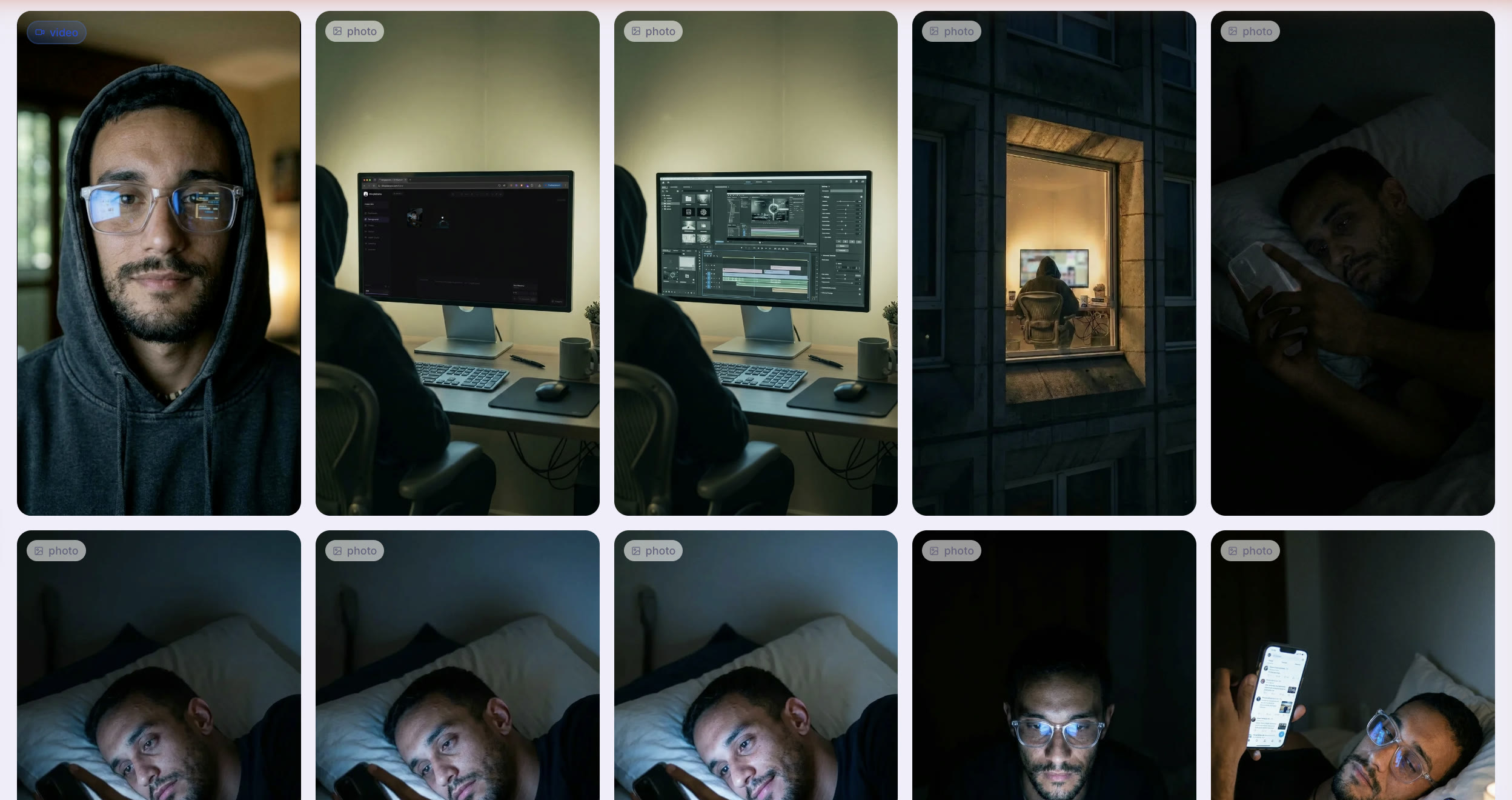
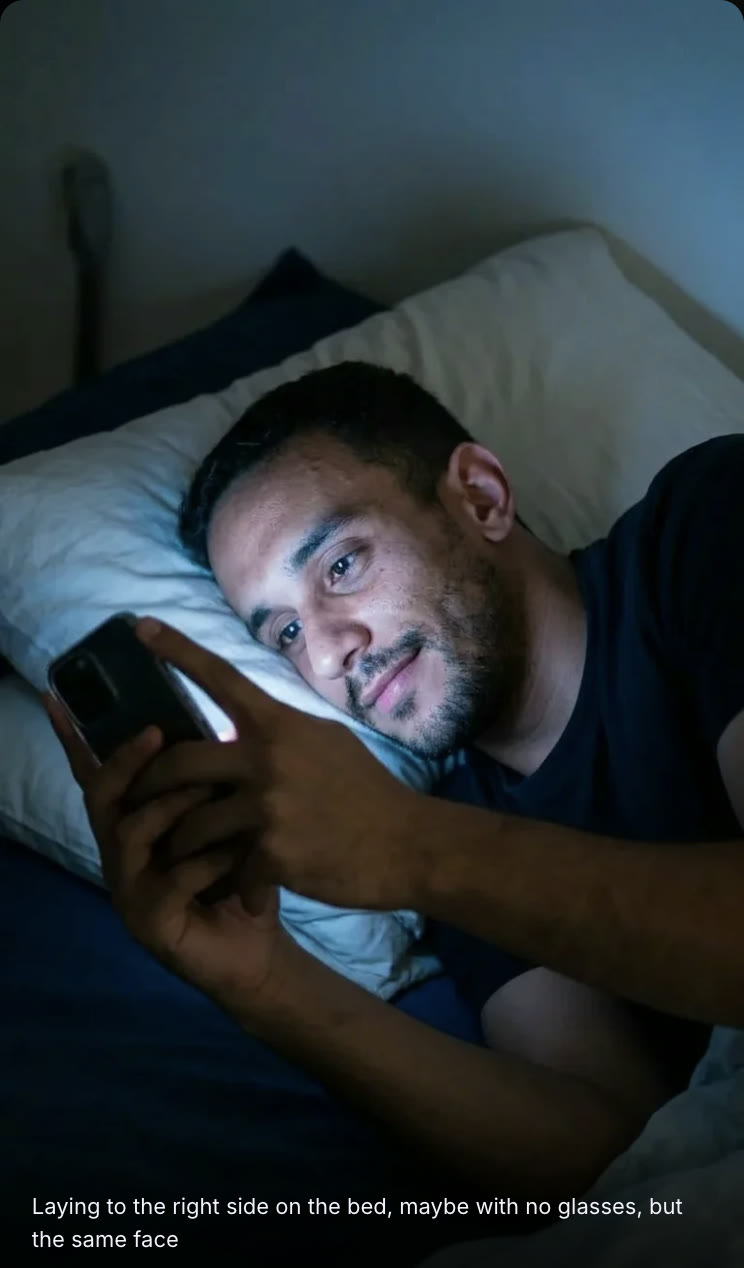
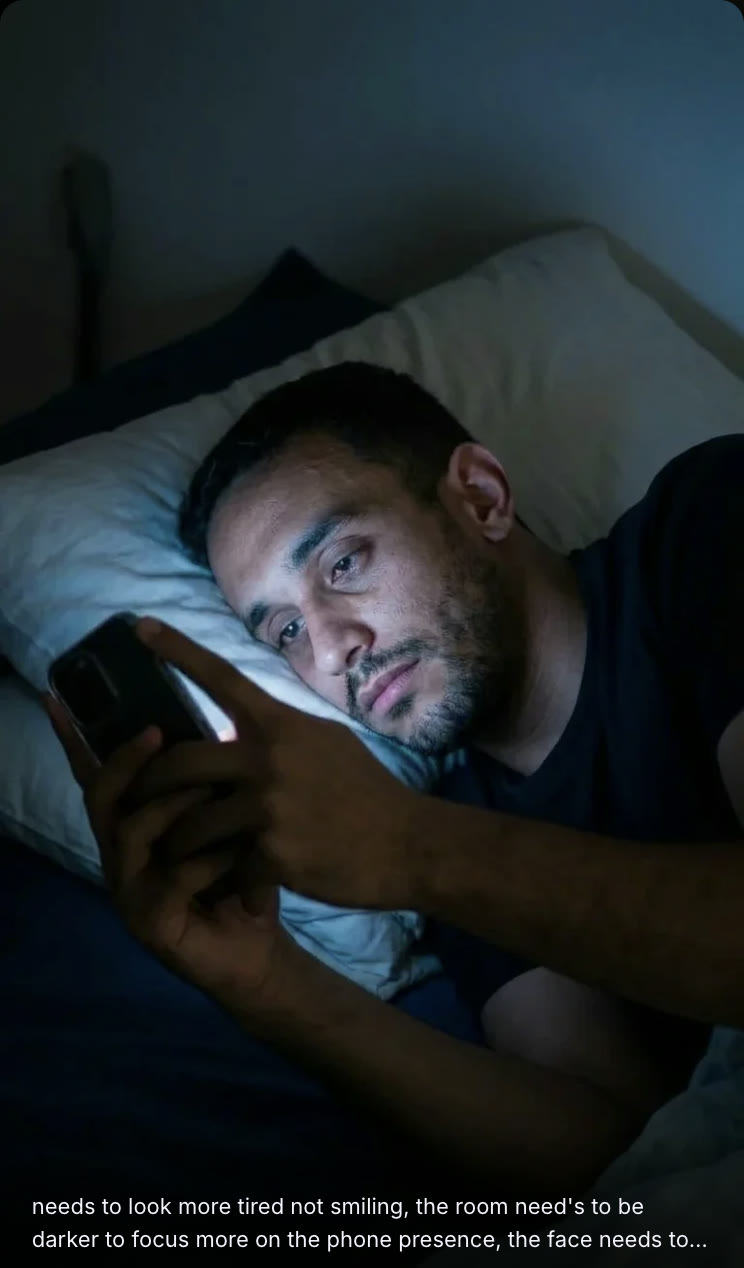
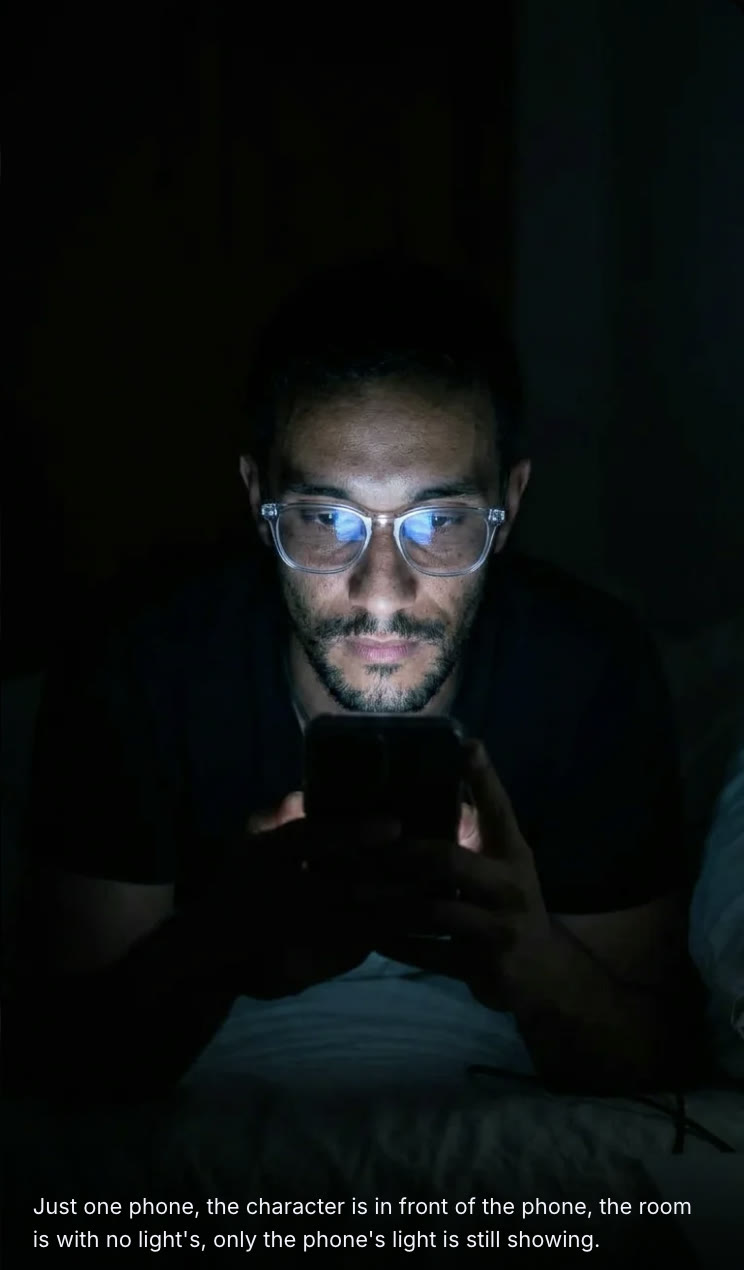
Straight from the Klingobanana gallery, each take with its prompt. Take 1 had the right face, but he was smiling: wrong mood for a film about addiction.
Take 2 asked for a tired face and a darker room. Take 3 fixed the eyes. Take 4 kept a single phone and nothing else lit but its screen. That is the one in the film.
Short corrections, one at a time, beat rewriting the whole prompt.
The camera enters the screen
We screen-recorded Klingobanana loading thumbnails, then chained two Kling generations.
First, a zoom into the screen until the UI slides out of frame. Second, a first-and-last-frame transition from that frame to the generated still of the bed, so the flat image comes alive as a room.
To be honest about it: the current cut only uses the first seconds of this fragment.
Camera slowly zooms into the computer screen, pushing toward the image displayed inside the interface, the UI edges slide out of frame, smooth continuous zoom, cinematic.
Seamless transition: the flat image comes alive, colors deepen, the scene becomes three-dimensional and real, subtle camera settle, cinematic morph.
The wall becomes a portal
The first script projected motivational quotes on the wall. We cut it: projected text reads as AI slop. The rule became show, never project text.
Instead the wall stays a wall. Shadows and cracks start to suggest shapes, then a glowing interface appears.
We made 3 progressive Nano Banana edits of the same bedroom-wall photo, then used Kling between the first and the last. Take 1 only gave early glowing lines. Take 2 gave the full burst, and that is the one we kept.
Edit: the shadows and wall cracks subtly begin forming abstract shapes — a hint of a face, a landscape — barely perceptible, everything else unchanged, realistic.
Edit: the shapes on the wall become clearer, soft glowing outlines emerging from the wall texture, dreamlike but grounded, the room still real.
Edit: a glowing interface portal materializes on the wall — the Klingobanana interface floating like a hologram projection, warm light spilling into the room, cinematic sci-fi realism.
The wall slowly comes alive: shadows morph into glowing shapes that form a floating luminous interface, organic slow transformation, light gradually filling the dark room, cinematic.
From the wall into the eye
The eye comes from the face reference set: a macro still with a screen reflected in the iris. It was the hardest photo to get, so we shot several tries.
A 14 s portal transition then carries the film from the wall to the face. For the dive itself, Kling starts from the macro still and falls into the pupil.
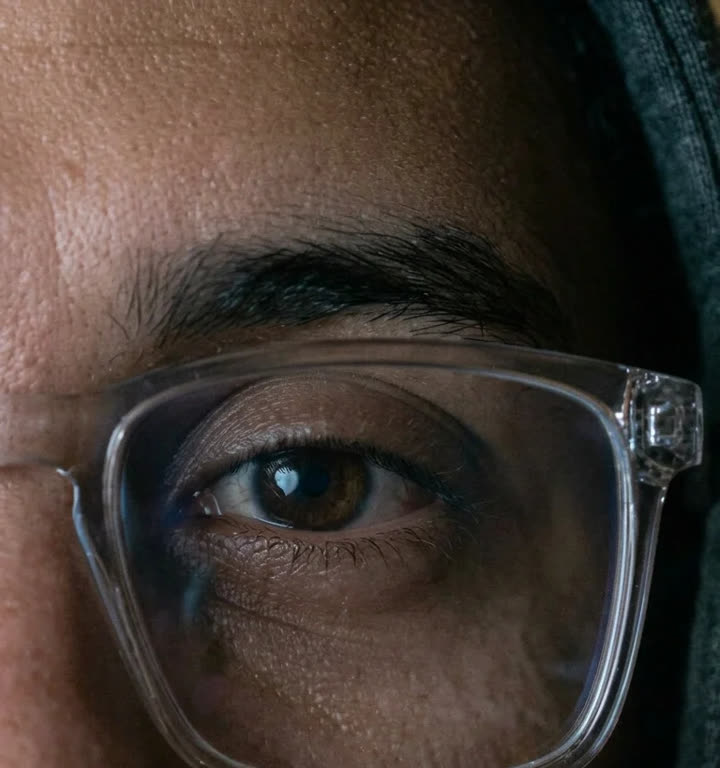
Extreme macro shot of a human eye, camera dives slowly INTO the pupil, the reflection of a computer screen visible in the iris grows larger until the darkness of the pupil swallows the frame, cinematic, hyper-detailed, shallow focus.
Voice, score and a cut timed to the words
Narration uses the stock ElevenLabs voice "Daniel" on eleven_v3. We tested a cloned voice and dropped it: the stock voice was more convincing.
The friends' Darija lines are voiced with two ElevenLabs voices. The score comes from ElevenLabs Music, built from a 4-section composition plan that matches the film's beats.
The edit is an HTML page animated with GSAP and rendered to video with HyperFrames. Captions show one word at a time, uppercase, in Outfit 900, popping in. Cuts are re-timed on the content words of the narration, using word-level timestamps.
Quiet Confession   0–9 s    sparse solo piano, reflective
Boredom Build      9–23 s   subtle rising pulse, mirrors compulsive checking
Portal Lift        23–33 s  swelling pads, hopeful ascending melody
Resolution         33–40 s  warm resolving piano, fade to silence
What went wrong, and the fix
The AI added two extra people
The friends clip came out with 4 people where the script wants 2. We kept the image and replaced the audio with two ElevenLabs Darija voices. The second line is sped up 1.34× with pitch preserved, so both lines end before the narration starts.
A screen recording rendered as 0 frames
The .webm had broken metadata (120 fps, no duration), so the renderer captured nothing. The fix: re-encode to H.264 MP4 at a constant 30 fps with faststart.
Quotes on the wall looked like AI slop
Projected text reads as generated filler. We dropped the quotes and show the transformation instead: shadows, cracks, then light.
The cloned voice lost to the stock voice
We tried a cloned narrator voice. It was less compelling than the stock one, so we reverted to "Daniel".
Make your own film
The prompts on this page work in Klingobanana. Paste one, change the subject, and build your own scene.
Start creating